
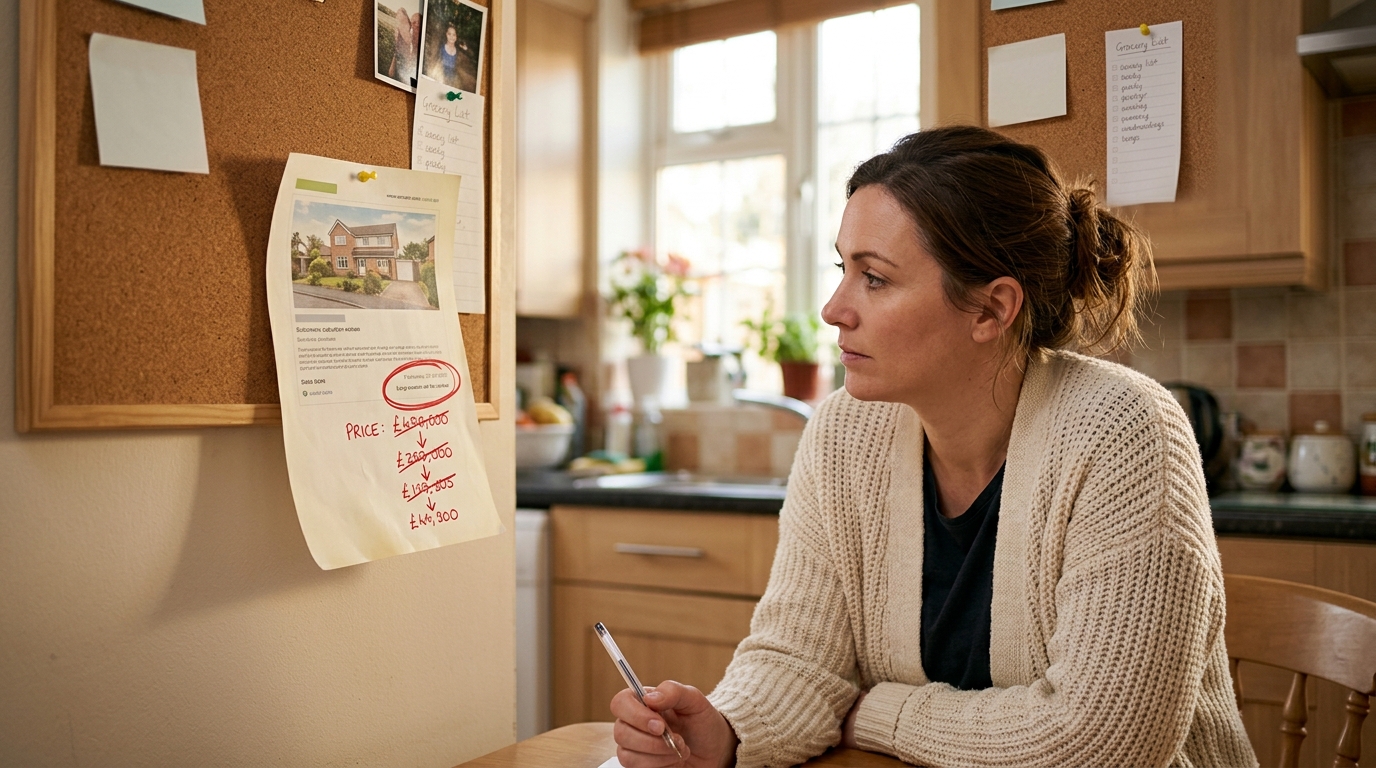

There is a temptation that almost every seller faces at some point. You have had a few agents round, you have heard different figures, and one of them has told you your home could achieve something that feels wonderfully optimistic. The logic seems sound: start high, see what happens, and come down if you have to. After all, you can always reduce the price later.
This is one of the most persistent myths in the property market, and it costs sellers money, time and stress every year.
Why Buyers Are Not Fooled
Buyers today are sophisticated. They spend weeks, sometimes months, browsing property portals before they ever book a viewing. They know the market in the areas they want to buy. They have seen what sold, what did not, and at roughly what price. When a property appears at a figure that feels wrong, they notice immediately.
An overpriced home does not just fail to attract offers. It often fails to attract viewings in the first place. Buyers set search filters based on price. If your home is priced above what buyers expect to pay for a property of its type and size, it may not even appear in the searches of the people most likely to buy it. That is a silent problem, and one that is easy to miss if you are only looking at portal views rather than actual enquiries.
The First Weeks Are Everything
When a property goes live on the market, it gets one chance to make a first impression. The moment of launch is when interest is highest. Buyers who have saved a search will receive an instant alert. Agents with active applicants will send details to anyone who fits the profile. The phones are busiest in those first two weeks.
If the price is wrong from the start, that peak moment passes without converting into viewings or offers. The property then begins to sit. Every additional day it spends on the market without going under offer makes it slightly less attractive to the next buyer who looks at it. In a market where homes are typically taking a considerable length of time to sell, a slow start can turn a manageable sales period into a very long and demoralising one.
In the Tonbridge area, around one in five properties listed will proceed to a sale being agreed. That means competition for serious buyers is real. You cannot afford to waste your launch window on a price that pushes them towards comparable homes down the road.
The Damage That Happens While You Wait
Sellers who overprice often console themselves with the idea that they can simply reduce later. What they underestimate is the damage that accumulates during the waiting period.
Property portals record how long a home has been listed. Buyers can see this. When they spot that a property has been sitting for several months, the first question they ask is: what is wrong with it? The honest answer is usually nothing, except the price. But that is not the conclusion most buyers reach. They assume there is a problem with the property itself, a structural issue, a difficult seller, a flood risk, a noisy road, something the photographs are hiding.
This perception problem is hard to reverse. Even when you reduce the price, buyers who already dismissed the property may not return. And those who do see the reduced listing may use the price drop as leverage. They know you have been waiting. They know you need a sale. They will offer lower still.
Price Reductions Send a Signal
Every time a price is reduced on a portal, the listing is refreshed with a label that reads, in effect, this did not sell at the original price. That label does two things. First, it attracts bargain hunters rather than buyers who value the home on its merits. Second, it signals to serious buyers that the seller may be under pressure, which invites lower offers and harder negotiation.
One reduction can sometimes be managed carefully, with good communication from your agent and a repositioning of the property. Multiple reductions are much more damaging. Each one erodes buyer confidence a little further. A property that has been reduced three times is, in the minds of most buyers, a property with a problem. The price history becomes part of the story the home tells about itself, and it is not a flattering one.
What Agents Mean by "Testing the Market"
You will sometimes hear agents use the phrase testing the market as if it is a reasonable strategy. It is worth understanding what this actually means in practice. It means launching at a price that is higher than the evidence supports, on the basis that a buyer might appear who is willing to pay it.
Occasionally this works. A buyer falls in love with a property, decides they must have it, and pays more than they planned to. But this is the exception, not the rule, and it is rarely worth the risk. The more common outcome is a slow launch, a growing sense of stagnation, a reluctant reduction, and a final sale price that is lower than what a realistic launch price would have achieved from the start.
The sellers who do best are almost always those who launch at a price that is well supported by evidence, attracts strong early interest, and generates competitive tension between buyers. Competitive tension is the only reliable mechanism for achieving a price above the asking figure.
What Good Pricing Actually Looks Like
Pricing a home well means looking honestly at what comparable properties have sold for, not just what they were listed at. It means understanding which features of your home add value and which are irrelevant to buyers. It means listening to an agent who can demonstrate their reasoning rather than simply flattering you with a high number.
A well-priced property at launch should feel like fair value to a buyer, compelling enough to book a viewing, and priced at a level where a buyer worries slightly that someone else might offer first. That sense of gentle urgency is what produces good outcomes. It cannot be manufactured by an inflated asking price. It can only be created by getting the price right from the beginning.
The Question to Ask Before You Go to Market
Before you agree to any asking price, ask your agent to show you the sold evidence that supports it. Ask them to show you what similar homes achieved, how long they took to sell, and how the final price compared to the original asking price. If the evidence supports the figure, proceed with confidence. If it does not, treat the valuation as optimism rather than analysis.
In a market where average prices around Tonbridge sit at a significant level, the stakes of getting this wrong are high. A missed launch window, a slow sale, and a below-evidence offer are outcomes that cost real money. The agent who gives you the honest price is doing you a greater service than the one who tells you what you want to hear.