
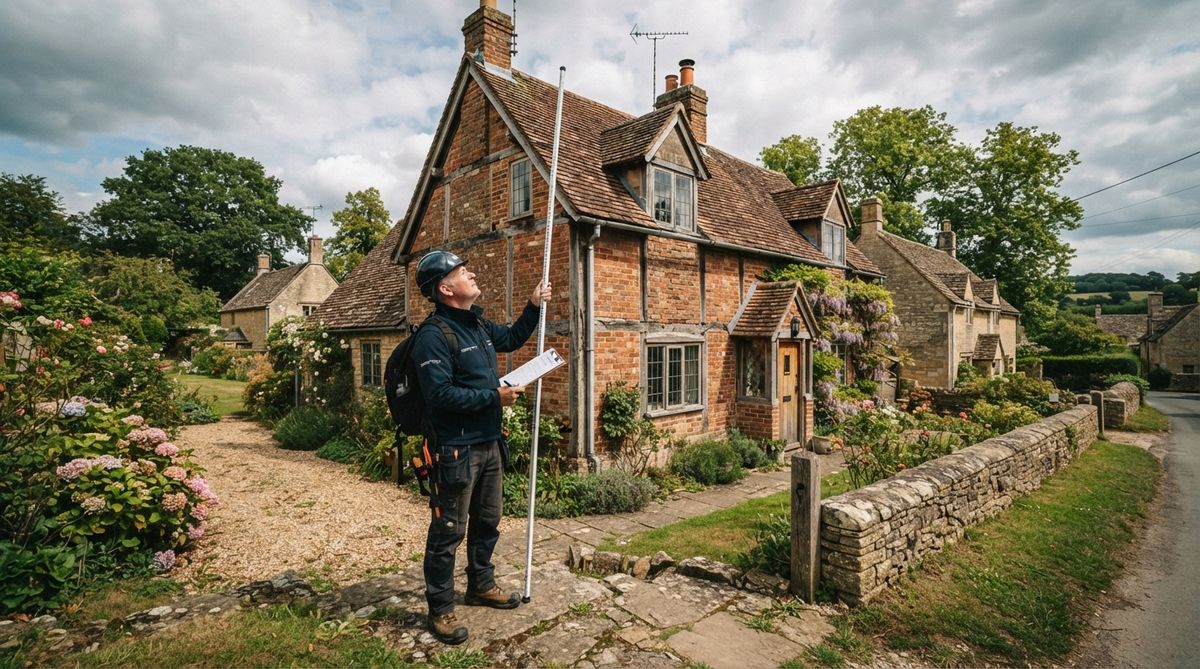

Buying a home is easily one of the most significant financial commitments you will ever make in your lifetime. Having spent over two decades working as an estate agent right here in Tonbridge, Kent, I have seen every possible scenario play out when it comes to property transactions. From charming Victorian terraces near Tonbridge Station to sprawling detached family homes in Hildenborough and character cottages in Leigh, every building tells a story. However, beneath the fresh paint and staging furniture, properties can sometimes harbour hidden issues that only a trained professional can uncover.
Many buyers make the mistake of relying solely on a mortgage valuation, assuming it serves as a guarantee of the property's structural health. In reality, a mortgage valuation is merely for the lender's peace of mind to confirm the property is worth the money they are lending you. To truly protect your investment and avoid unexpected repair bills that could run into the thousands of pounds, you need a dedicated property survey. Let us explore the different survey types available and how to determine which one is right for your prospective new home.
Why a Property Survey Matters More Than You Think
When you fall in love with a property, it is easy to view it through rose tinted glasses. You picture where your furniture will go and how you will spend summer afternoons in the garden. Unfortunately, enthusiasm does not stop a damp proof course from failing or roof tiles from slipping. Investing in an independent survey gives you a factual, objective assessment of the physical condition of the property, stripping away the cosmetic gloss to reveal what is happening beneath the surface.
In my experience across Kent, skipping a survey to save a few hundred pounds is a false economy. According to data from the Royal Institution of Chartered Surveyors, buyers who do not get a survey end up spending an average of five thousand seven hundred pounds on unexpected repairs after moving in. A comprehensive survey report gives you powerful leverage. If major defects are uncovered, you can use the findings to renegotiate the purchase price or ask the vendor to carry out remedial works before exchange of contracts.
Consider a recent transaction we handled involving a 1930s semi detached house in Shipbourne Road. The buyers initially opted out of a survey, trusting their own brief walkaround. Fortunately, our advice prevailed, and they commissioned a HomeBuyer Report. The surveyor discovered significant timber rot in the subfloor voids and an aging roof structure needing immediate attention. This allowed the buyers to negotiate a ten thousand pound reduction, turning a potential financial disaster into a manageable project.
Understanding the RICS Survey Tiers
The Royal Institution of Chartered Surveyors provides a standardised framework for residential property surveys, categorising them into three distinct levels. Understanding these tiers is essential because selecting the wrong level can leave you with either too little information or paying for unnecessary detail. The terminology can sometimes feel confusing, but the principle is simple: as the level increases, so does the depth of investigation and the breadth of the report.
Level 1 is designed for modern, conventional homes in good condition, offering a basic overview. Level 2 provides a more thorough inspection with traffic light ratings, making it the most popular choice for standard properties. Level 3 is the most comprehensive, ideal for older, larger, or heavily altered buildings. Choosing the correct level depends heavily on the age, construction type, and known history of the home you are looking to purchase around Tonbridge and the surrounding Kent countryside.
Prices generally scale with the depth of the report. You might expect to pay anywhere from four hundred pounds for a basic condition report up to fifteen hundred pounds or more for a full building survey on a substantial country home. However, viewing this cost as an insurance policy rather than an expense changes the perspective entirely. A few hundred pounds spent now can easily save you a small fortune down the line.
Condition Report - Level 1 Demystified
The RICS Level 1 Condition Report is the most basic survey available on the market. It uses a clear traffic light rating system to give you a snapshot of the property's general condition. Green indicates no repair is currently needed, amber means the condition is such that it needs watching or maintenance, and red signifies serious defects requiring urgent attention or repair.
This report is best suited for newer build properties or conventional homes built within the last thirty years that have been well maintained. Because homes built recently typically use modern materials and adhere to stringent building regulations, they rarely suffer from the hidden structural subsidence or chronic damp issues that plague older properties. If you are buying a modern apartment or a recent development in Tonbridge, a Level 1 report usually provides adequate reassurance.
However, you must understand what a Level 1 report does not do. It does not include a valuation, nor does it provide detailed advice on repairs or ongoing maintenance. The surveyor will not lift carpets, open up wall cavities, or test the plumbing and electrical systems. If you are looking at a property with character, history, or obvious signs of wear, you will certainly need to look higher up the survey ladder.
HomeBuyer Report - Level 2 Explained
The RICS Level 2 HomeBuyer Report, sometimes referred to as a survey and valuation, is the gold standard for the vast majority of standard residential purchases. This is the survey I most commonly recommend to buyers looking at semi detached houses, modern detached properties, and standard bungalows across Kent. It is thorough, highly readable, and hits the sweet spot between depth and cost.
During a Level 2 inspection, the surveyor will examine all visible and accessible parts of the property. This includes the roof space, visible timbers, windows, doors, and the outside walls. They will look closely for signs of dampness, woodworm, and structural movement. Crucially, if you choose the option that includes a valuation, the surveyor will also provide their professional opinion on the market value of the property and a reinstatement cost for insurance purposes.
One of the major benefits of the HomeBuyer Report is its practical advice. If the surveyor spots an issue, they do not just point it out; they explain the potential consequences of leaving it unattended and offer guidance on how to fix it. For example, if they notice cracked render or blocked guttering on a property near Haysden Country Park, they will flag how this could lead to penetrating damp if neglected over the winter months.
Building Survey - Level 3 Comprehensive Analysis
When you venture into buying older, larger, or more unusual properties, a standard HomeBuyer Report simply will not suffice. This is where the RICS Level 3 Building Survey comes into its own. Formerly known as a structural survey, this is the most exhaustive and detailed inspection available. It involves a comprehensive examination of the property's construction, fabric, and condition from top to bottom.
I always advise a Level 3 survey for properties built before the 1950s, listed buildings, timber framed homes, or properties that have undergone significant structural alterations, extensions, or conversions. If you are purchasing a historic oast house in the Kent countryside or a rambling Victorian property with deep historical roots, this is the survey you need. The surveyor will inspect the roof space, climb into cellars, test moisture levels in walls, and examine outbuildings.
The resulting report is extensive, often running to dozens of pages. It includes a detailed technical breakdown of construction materials, potential hidden defects, the exact causes of any problems found, and a prioritized action plan for repairs complete with estimated cost implications. Armed with this level of detailed analysis, you enter negotiations with total confidence, knowing precisely what liabilities you are taking on.
New Builds and Historic Properties - Tailored Inspections
A common misconception among buyers is that new build properties do not require any form of independent inspection. People assume that because a property comes with a ten year structural warranty, such as an NHBC guarantee, everything must be flawless. In reality, modern volume housebuilding relies on subcontractors working at speed, and minor, or sometimes major, defects slip through the cracks. For new builds, a snagging survey is essential.
A snagging survey is carried out just before you complete your purchase or shortly after you move in. An independent inspector checks everything from cosmetic finishes like plastering and painting to functional elements like plumbing alignment, window seals, and roof tile placement. Developers are legally obliged to fix these snags under your warranty, but getting them documented professionally ensures nothing gets ignored.
On the opposite end of the spectrum, historic properties require specialist knowledge. Properties in conservation areas around Tonbridge or rural Kent often feature lime mortar, lath and plaster walls, and historic timber frames. Using a general surveyor who does not understand traditional building physics can lead to disastrous advice, such as recommending modern cement pointing that traps moisture in historic brickwork. Always ensure your surveyor has specific experience with period properties if your dream home carries a history.
Common Pitfalls Uncovered in Tonbridge Homes
Having handled countless property sales in and around Tonbridge, I have noticed certain recurring issues that local surveys frequently uncover. Being aware of these common pitfalls can help you spot potential red flags even before your surveyor steps foot through the front door. Understanding local geography and geology also plays a massive part in knowing what to look for.
One common issue in parts of Kent is the presence of heavy clay soil. Clay is susceptible to moisture changes, shrinking during dry summer months and swelling during wet winters. This seasonal movement can occasionally lead to minor subsidence or cracking in older properties with shallow foundations. Surveyors will look closely at wall corners and window frames for telltale diagonal stair step cracks that indicate structural shift.
Another frequent finding is dampness, particularly in older properties situated close to the River Medway or low lying flood zones. Rising damp, penetrating damp, and condensation are common culprits that require specialist diagnosis. A good survey will pinpoint the exact source of the moisture rather than just recommending a generic quick fix. Armed with this knowledge, you can address the root cause, whether it involves improving subfloor ventilation or repairing damaged flashing on a chimney stack.
How to Choose the Right Surveyor and Next Steps
Once you decide to move forward with a survey, choosing the right professional is critical. Always ensure your chosen surveyor is a member of RICS and holds the designation of MRICS or FRICS. This guarantees they are fully qualified, adhere to strict professional ethics, and carry adequate professional indemnity insurance. Local knowledge is another massive advantage, as a surveyor working regularly in Tonbridge will understand local soil conditions, common building styles, and regional property values.
Do not simply choose the cheapest quote you find online. A thorough survey requires time, expertise, and meticulous attention to detail. Talk directly to the surveyor before booking to discuss any specific concerns you have about the property, such as a sagging roofline or an unusual smell of damp in the cellar. This ensures they tailor their inspection to address your exact worries.
Our team at Jack Charles Estate Agents can recommend trusted local surveyors and guide you through the process. Get in touch for expert advice.
Remember that a survey is not designed to scare you out of buying a home. Every property, no matter how well maintained, requires ongoing care and maintenance. The true value of a survey lies in giving you clarity, peace of mind, and the negotiating power to secure your next home on fair terms.