
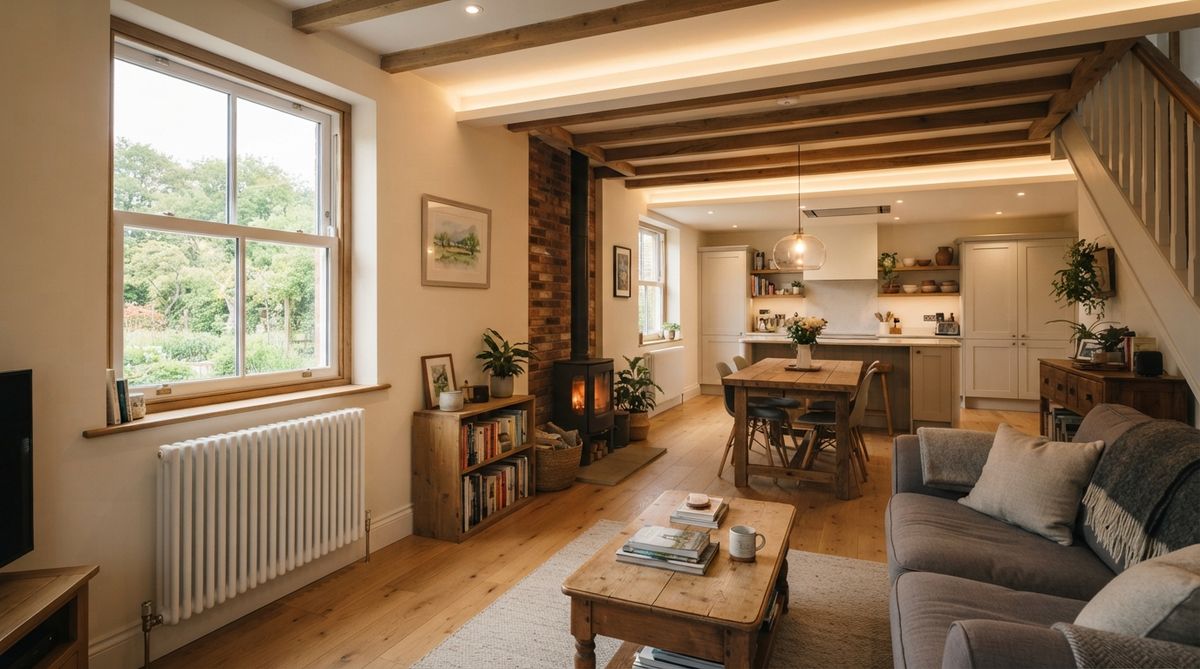

Over my two decades working as an estate agent across Tonbridge and the surrounding Kent countryside, I have seen buyer priorities shift significantly. Today, energy efficiency is no longer just a nice to have feature mentioned casually at the end of a viewing. Modern buyers are scrutinising Energy Performance Certificate ratings before booking a second viewing, driven by soaring household energy bills and an increasing awareness of environmental impact. Properties that perform poorly on paper can sit on the market longer, or attract lower offers, as buyers factor in future upgrade costs.
As local homeowners look to secure the best possible price for their properties, understanding which energy efficiency improvements actually deliver a return on investment is critical. Not all green upgrades are created equal, and spending thousands on complex installations does not always translate into a higher sale price. In this guide, I will walk you through the practical steps you can take to boost your rating, attract discerning buyers, and ensure your home stands out in the competitive Tonbridge property market.
Understanding EPC Ratings in Today's Market
Before you pick up a paintbrush or call a contractor, you need to understand how Energy Performance Certificates work and how buyers view them. An EPC rating ranges from A, which is exceptionally efficient, down to G, which indicates high energy consumption and poor insulation. When you list your property for sale, having a valid EPC is a legal requirement, and savvy buyers will look up your rating online within seconds of seeing your listing on portals like Rightmove.
In recent years, government discussions around minimum energy efficiency standards for rental properties have spilled over into the sales market, creating a psychological benchmark for buyers. Many purchasers actively search for properties rated C or above, viewing lower ratings as an immediate financial liability. If your home currently sits in band E or F, you may find that buyers use this as a direct negotiation tactic to chip away at your asking price.
Knowing your current rating allows you to target your budget effectively. You can review the recommendations section at the back of your existing certificate, which outlines specific measures that will lift your score. However, not every recommendation on that official document is financially sensible when you are preparing to move, so consulting an experienced local agent helps you separate high-return improvements from wasted expenditure.
Low-Cost, High-Impact Quick Wins
You do not need to empty your savings account to make a noticeable difference to your home energy profile. Some of the most cost-effective improvements can be completed over a single weekend with minimal technical expertise. Upgrading all your remaining incandescent or halogen bulbs to modern LED alternatives is an inexpensive starting point that costs less than fifty pounds for an average three-bedroom semi-detached house in Tonbridge, yet it immediately signals to buyers that the property is well maintained.
Another immediate win involves addressing draughts around doors and windows. Cold air leaks force your heating system to work harder, driving up energy consumption and lowering perceived comfort levels during viewings. Installing brush strips on exterior doors and self-adhesive foam seals on window frames costs very little, but it stops chilling breezes in their tracks. When a prospective buyer walks through your front door on a crisp autumn afternoon, a warm and draught-free hallway creates an exceptional first impression.
Do not overlook your hot water cylinder if you have one. Fitting a British Standard insulating jacket that is at least eighty millimetres thick costs around twenty pounds and pays for itself within months. Simple interventions like these demonstrate meticulous property care, and buyers notice the little details that prove a home has been looked after with pride.
Upgrading Windows and Doors
Windows are primary culprits for domestic heat loss, accounting for up to twenty percent of total thermal leakage in uninsulated properties. If your home features ageing single glazing or failing double glazing with misted panes, upgrading to modern A-rated double or triple glazed units is a substantial investment that pays dividends when selling. Buyers in areas like Hildenborough and Leigh frequently look for modern fenestration because replacing windows independently can easily cost ten thousand pounds or more.
When selecting new frames, consider both thermal performance and aesthetic harmony with your property style. Traditional Victorian terraces and Edwardian semi-detached homes found across Tonbridge look best with flush casement windows that mimic timber joinery while delivering modern energy efficiency standards. UPVC technology has advanced remarkably, offering woodgrain finishes that satisfy local conservation preferences without compromising on heat retention or acoustic insulation against passing traffic.
Exterior doors deserve equal attention. A solid, composite front door with high-density foam core insulation provides superior security and thermal performance compared to older timber or hollow PVC doors. Replacing a tired front door not only boosts your EPC score slightly, but it also transforms the primary focal point of your kerb appeal, drawing admiring glances from everyone walking past your gate.
Heating Systems and Boiler Upgrades
The heating system is the beating heart of any home, and an outdated, inefficient boiler is a major red flag for prospective buyers. If your boiler is more than twelve to fifteen years old, its efficiency has likely dropped below seventy percent, meaning nearly thirty pence of every pound spent on gas is disappearing. Replacing an old boiler with a modern condensing model can cost between two thousand five hundred and four thousand pounds, but it instantly eliminates one of the biggest anxieties a buyer faces.
Beyond the boiler unit itself, upgrading your heating controls can yield impressive gains on your EPC report for a fraction of the cost. Smart thermostats like Hive or Nest allow precise zone heating and remote management, appealing strongly to tech-savvy professionals and young families moving down from London into Tonbridge. Installing modern thermostatic radiator valves in every habitable room enables occupants to control temperatures individually, showcasing a modern, responsive heating infrastructure.
If you live in a rural pocket outside the town centre where mains gas is unavailable, upgrading from older oil systems or inefficient electric storage heaters to modern alternatives is even more critical. Buyers looking at character properties in surrounding villages are acutely conscious of running costs, so proving that your heating system is modern and economical removes a significant barrier to sale.
Roof and Loft Insulation Essentials
Heat naturally rises, making your roof space a prime target for thermal improvement. Building regulations currently recommend a loft insulation depth of at least two hundred and seventy millimetres of mineral wool or equivalent material. If your Tonbridge loft only has a sparse layer laid down decades ago, topping it up to the modern standard is a straightforward DIY task or an inexpensive job for a local tradesperson, usually costing between three hundred and six hundred pounds depending on floor area.
The return on this investment is disproportionately high in terms of EPC points. Loft insulation is one of the most heavily weighted factors in energy rating calculations, often pushing a property up an entire band. Furthermore, effective loft insulation prevents heat escaping through the roof tiles, which also stops problematic ice dams and condensation build-up in the attic space, keeping your roof timbers healthy and dry for years to come.
If your property features a room in the roof or a converted attic, internal or external wall insulation for those specific sloping ceilings might be necessary. While more complex, these targeted interventions ensure that habitable spaces directly under the roof remain warm in winter and cool in summer, creating comfortable bedrooms that appeal directly to growing families looking for functional living space.
Renewable Energy Technologies Worth Considering
Solar photovoltaic panels have transitioned from an eccentric niche installation to a highly desirable mainstream asset. With electricity prices remaining stubbornly high, homes equipped with solar photovoltaic panels generate immediate appeal among eco-conscious buyers. A standard residential solar installation with battery storage can cost anywhere from six thousand to twelve thousand pounds, depending on system size, but it dramatically lowers projected household electricity bills and catapults your EPC rating upwards.
When considering solar panels, think about how they look from the street. Front-facing installations can occasionally divide opinion on period properties, so mounting panels on a rear elevation or garage roof is often the preferred strategy for homes in conservation areas or traditional Tonbridge neighbourhoods. If your roof faces south or west and receives unobstructed sunlight, the financial payback period through energy savings and export tariffs makes it a compelling pre-sale project.
Air source heat pumps are another technology gaining traction, particularly as government grants help offset initial installation costs. However, heat pumps require high levels of existing insulation to function efficiently, so they are rarely a quick fix right before selling. If you have already insulated your property thoroughly and want to future-proof a long-term family home, heat pumps represent the cutting edge of domestic sustainability, though standard boiler replacements remain more practical for a quick market turnaround.
Navigating Historic Homes in Tonbridge
Tonbridge boasts a rich historic architectural heritage, from Georgian townhouses to Victorian terraces and picturesque Edwardian suburban villas. Owning a period property is a privilege, but it presents unique challenges when attempting to boost energy efficiency. Listed buildings or properties situated within strict conservation zones are often exempt from standard EPC requirements, but ordinary period homes still require careful handling to avoid damaging their historic fabric with inappropriate materials.
For example, installing modern spray foam insulation in the roof of a Victorian property can trap moisture against traditional timber rafters, leading to rot and structural decay. Similarly, sealing up historic chimneys without adequate background ventilation can cause damp issues to plague your external walls. Always consult specialists who understand historic building pathology before undertaking major thermal retrofits on older properties in our local area.
Secondary glazing is a fantastic compromise for period homes with original sash windows that cannot be legally replaced. It preserves the historic exterior appearance while providing exceptional thermal and acoustic insulation. Buyers looking for character homes appreciate when vendors preserve architectural integrity while quietly integrating modern comforts, making your property an irresistible proposition on the local market.
Request a free property valuation and we will advise on which energy efficiency improvements could add the most value before you sell.