
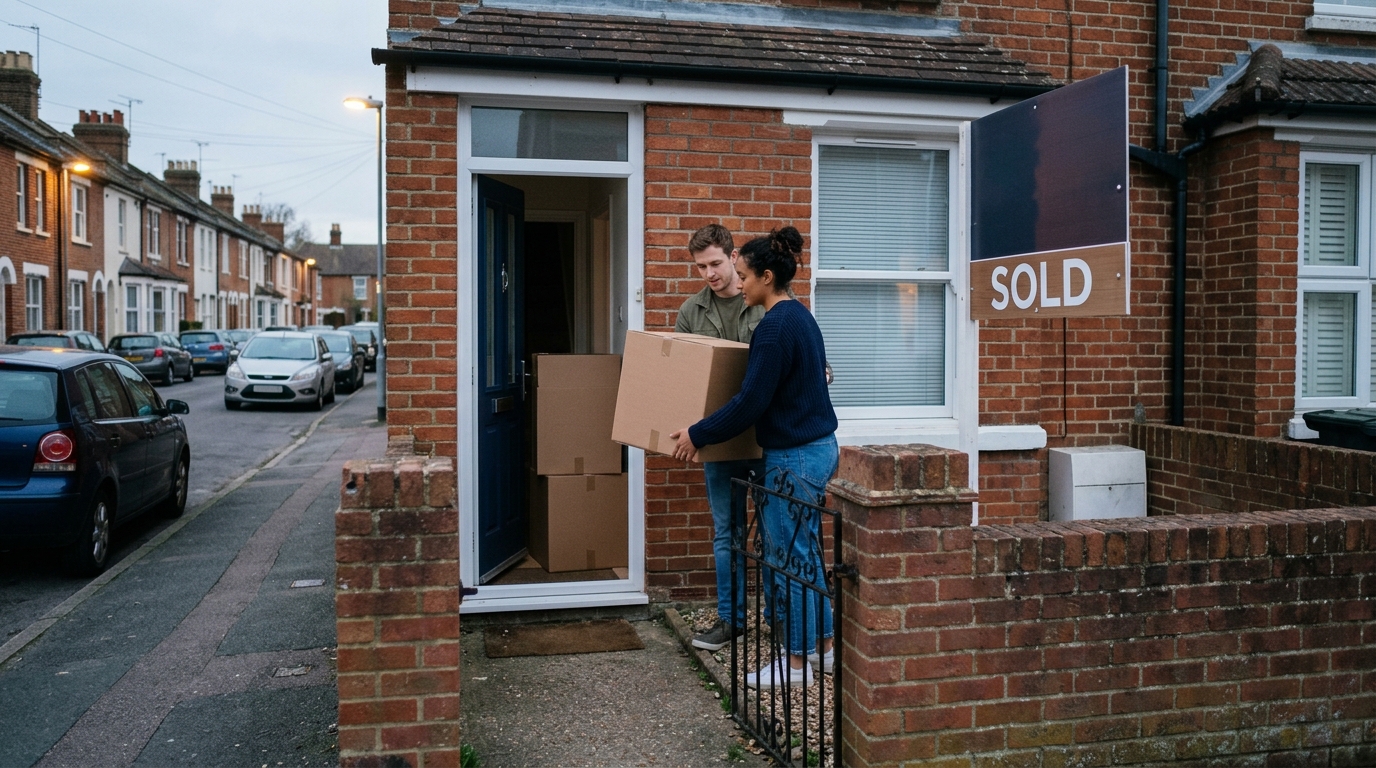

For years, the 100% mortgage has been treated as a relic of a reckless era, something wiped out by the 2008 crash and never quite trusted again. That is changing. This week, the BBC reported on young couples who have bought their first homes without saving a single penny towards a deposit, using a product from Skipton Building Society that covers the full value of the property. It is a small but telling story, and it has real implications for buyers here in Kent, where the gap between renting and owning has become one of the defining frustrations of the local market.
Conroy, 32, and his partner Amber, 28, had been renting in central Manchester and, like so many tenants, found saving for a deposit almost impossible while paying rent and covering rising living costs. In August they bought a four-bed home in Swinton for £242,000 using Skipton's Track Record mortgage, a deal that covers 100% of the value of a property, with the borrower paying nothing upfront, though borrowers must meet strict eligibility checks and pay a higher interest rate, in Conroy and Amber's case 5.33% fixed for five years. Their monthly repayments come to roughly what they were paying in rent. A second couple, Bronya, 27, and George, 29, used a similar low-deposit route from Lloyds to buy a four-bedroom house in Rhuddlan, North Wales, putting down just £5,000 against a purchase price that required borrowing around 98% of the property's value.
A market shift not seen since before the crash
These are not isolated products dreamed up by one lender chasing headlines. The last time the Bank of England recorded a share of low-deposit mortgages this high was in the second quarter of 2008, compared with just 7% in the same period of 2025. Building societies and high street banks have been racing to fill the gap left by soaring rents and stagnant savings rates. Building societies such as Skipton and Hanley Economic have launched zero deposit mortgages for renters, while other lenders such as April have launched their own 100% mortgages. Lloyds, Santander and Yorkshire Building Society have all introduced deals covering 95% or more of a property's value over the past few years, pitched squarely at first-time buyers priced out of traditional saving routes.
It is worth remembering why this matters so much psychologically for the market. Loose lending on low deposits was one of the contributing factors behind the 2008 crash, and any return of the idea invites scrutiny. David Hollingworth, associate director at brokers L&C Mortgages, argues the comparison does not quite hold up this time. Today's deals have much stronger affordability checks and do not pose the same risks, he says. Borrowers of Skipton's zero-deposit mortgage, for example, have to prove they have kept up with their rent for at least 12 consecutive months and credit payments for the last six months. Hollingworth points out that lenders are recognising that some people have good affordability but may be struggling to save for a deposit while paying rent and dealing with cost of living pressures.
Why Kent renters will recognise the story
This is not a distant, Manchester-only story. Kent's first-time buyers face a version of the same squeeze, and the county has developed its own patchwork of schemes to try to bridge it. The four main routes for first-time buyers here in 2026 are the Mortgage Guarantee Scheme, which supports 95% mortgages on homes up to £600,000, the Lifetime ISA with its 25% government bonus on savings up to £4,000 a year, Shared Ownership, and First Homes, which offer at least a 30% discount on selected new builds. Stamp duty relief also plays a part locally. Most first-time buyers in Medway and Rochester currently pay no stamp duty at all, since first-time buyer relief removes it on homes up to £300,000. And on rates, first-time buyer mortgage rates in Kent have generally ranged from around 3.75% to 5.60% depending on deposit size, credit profile and fixed-rate length.
Kent's broader housing market has been cooling rather than roaring, which adds an interesting wrinkle to the deposit debate. At the end of 2025, house prices across the county had declined by around 5% on average, though this outperformed both the wider South East at 7% and England and Wales at 10%. A softer market can cut both ways for a would-be buyer using one of these low-deposit products. Lower asking prices make a purchase more attainable in cash terms, but a borrower who puts down nothing at all has no buffer if prices dip further after completion. That is precisely the trade-off Conroy and Amber have been thinking through in Greater Manchester, and it applies just as much to a first-time buyer eyeing a terrace in Chatham or a semi in Ashford.
The negative equity question
The obvious risk with any 100% mortgage is straightforward, even if it rarely feels real until it happens. If you borrow the entire value of a home and prices fall, you can end up owing more than the property is worth. That situation, negative equity, leaves a borrower badly exposed if they are forced to sell, whether through a job loss, a relationship breakdown or simply a change in circumstances. Conroy is alert to this. He says there is always an element of a gamble with the property market, but that having researched the area he does not expect prices to fall there. He and Amber plan to overpay their mortgage for the first five years specifically to build equity faster and reduce that exposure.
This is the sensible instinct any broker would encourage, and it is the detail that separates a considered no-deposit purchase from a reckless one. A 100% mortgage is not free money. It simply reshuffles the order in which risk is taken on. Instead of years spent scraping together a deposit while rent eats into savings, the buyer accepts a higher interest rate and a thinner safety margin from day one, betting that steady overpayments and rising incomes will close that gap before anything goes wrong.
What this means going forward
For Kent's first-time buyers, the lesson from this story is not that a no-deposit mortgage is right or wrong in principle. It is that the range of options has genuinely widened, and that widening comes with real conditions attached, from proven rental payment history to stricter affordability testing than existed before 2008. Anyone renting in Maidstone, Gravesend or Folkestone and watching a deposit target slip further away each year now has more products to consider than they did even two years ago, alongside the county's own stamp duty relief and shared ownership routes.
The bigger question is what happens if the housing market turns choppier than expected over the next few years. Products like Skipton's Track Record mortgage were built for a market where affordability checks are tight and price falls are assumed to be modest. Whether that assumption holds will shape how comfortable the next wave of zero-deposit buyers feels about a decision that, for Conroy at least, still barely feels real.