
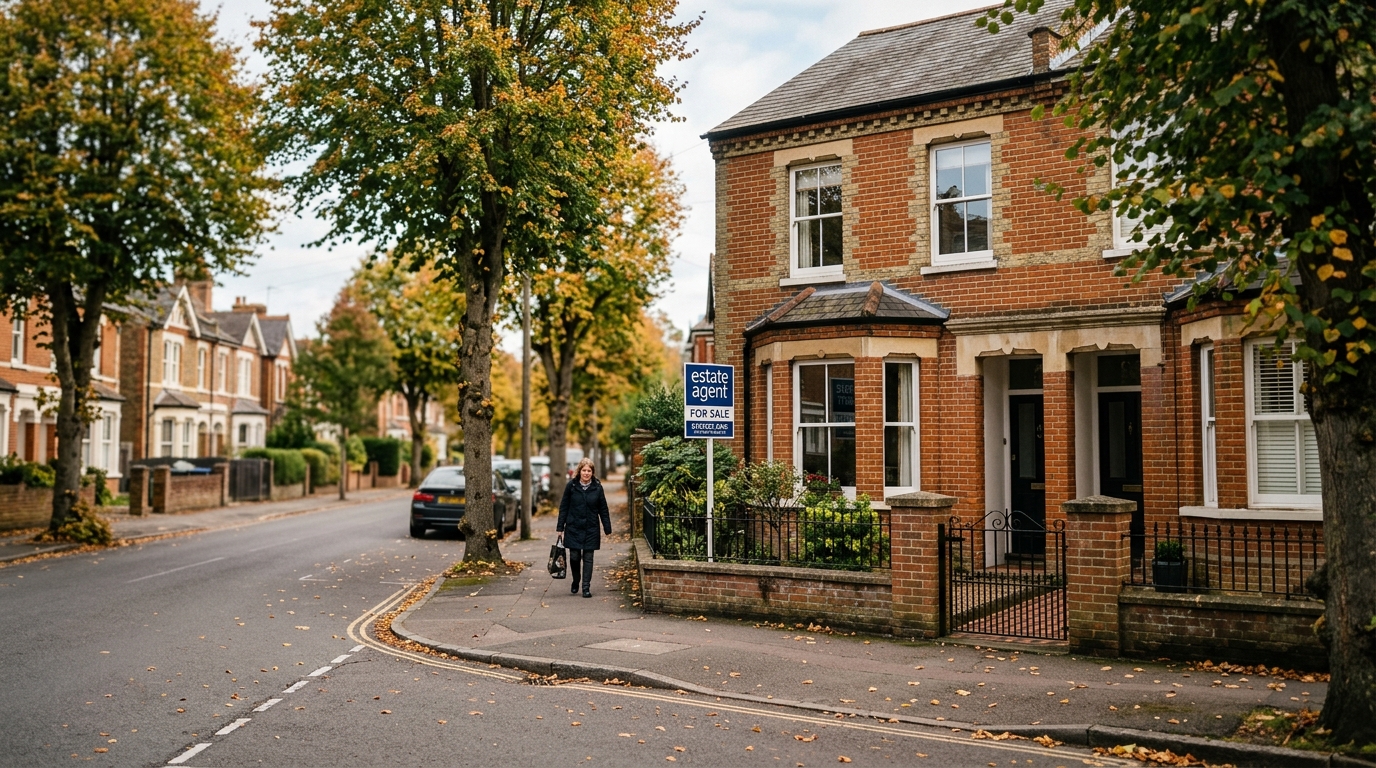

US borrowing costs jumped to a fresh high this week, and the ripples are already lapping at front doors in Tonbridge. The effective interest rate on US government borrowing over ten years rose to 4.79%, its highest level since January 2025, as oil prices surged above $92 a barrel following renewed strikes in the Middle East. That might sound like a story for the financial pages rather than the property pages, but bond market moves of this size rarely stay confined to Wall Street. They set the tone for mortgage pricing, loan costs and investor confidence right across the global economy, Kent included.
A Transatlantic Shock Wave
The mechanism is straightforward enough once you follow it through. Governments borrow money by selling bonds, and investors demand higher returns, or yields, when they fear inflation is running hot or likely to stay elevated. Those yields then set the benchmark for borrowing costs everywhere else, from company debt to household mortgages. When the US 10-year yield jumps, the effect is felt well beyond American shores.
Britain has not been spared. UK 10-year gilt yields climbed above 5.2%, tracking a broader global bond sell-off and reaching their highest level since June 2008, as rising oil prices and increasingly hawkish signals from major central banks have fueled expectations for further rate rises. Separate market reporting on the same day found the US 10-year Treasury yield climbing to roughly 4.78 percent, its highest level since January 2025, while counterparts in Japan, Germany, and the UK all hit their own milestones of pain, with markets assigning a 65 to 74 percent probability of a Federal Reserve rate hike in September following hawkish signals from policymakers.
Some of the language coming from central bankers has not helped calm nerves. A governor at the Federal Reserve warned this week that inflation had been too high for five years and that the Fed should act decisively to raise rates if price pressures don't cool. That follows comments from Fed chairman Kevin Warsh, who took over the role earlier this year, that policymakers would have work to do if they weren't confident cost-of-living pressures were easing for ordinary Americans. Markets have been hanging on every word.
Threadneedle Street's Own Balancing Act
Closer to home, the Bank of England has been treading carefully. The Bank of England has now held the base rate for five consecutive meetings since December 2025, with 30 July being the latest, keeping it at 3.75%. A further decision is due later this month, and while investors are watching closely, nothing has been decided yet. That is a genuine unknown hanging over anyone weighing up a purchase or a remortgage right now.
Fixed mortgage deals have not been moving in a straight line either. Average fixed mortgage rates have started nudging down in September after recent increases, amid renewed turmoil in the Middle East, although some lenders are still increasing fixed mortgage rates, with the average two-year fixed rate now at 5.52 percent and the average five-year fixed rate at 5.64 percent. Academic commentary has made a similar point: borrowing costs remain stubbornly high, mortgage rates have not fallen as much or as fast as expected and financial markets signal that rates may stay elevated for longer. In other words, the hoped-for relief on mortgage pricing has been patchy at best, and the latest bond market turbulence risks pushing that relief further out.
What This Means on Tonbridge's Own Doorstep
Locally, the numbers already tell a story of a market that has slowed rather than stalled. Average asking prices across the areas we track sit at £883,309, with annual growth flat at 0.0%. That is not a market in retreat, but nor is it one racing ahead. It is a market that has found a level and is sitting there, waiting for a reason to move in either direction.
The more telling figure is time on the market. Properties are currently taking an average of 182 days to find a buyer, roughly six months, which is a long window by historic standards. Only 30% of listings are currently sold subject to contract. Put those two figures together and you get a picture of buyers who are willing to look, willing to view, but slower than usual to commit.
At price points north of £800,000, financing costs matter enormously. A quarter-point shift in a fixed mortgage rate on a loan of that size translates into a meaningful difference in monthly repayments, often hundreds of pounds. When global bond yields are jumping around on the back of oil shocks and central bank rhetoric thousands of miles away, it is exactly this kind of higher-value, mortgage-dependent buyer who tends to pause first and ask more questions before signing anything.
A Market Waiting For Clarity
None of this is unique to Tonbridge. Investors have also flagged wider worries feeding into bond markets, including the scale of government borrowing around the world and uncertainty over the return on investment from the huge sums Big Tech firms are pouring into artificial intelligence. Both add to a general climate of caution that filters down into how confident buyers feel about taking on new debt, whatever the postcode.
For sellers in this market, the lesson from the current data is a familiar one dressed in new clothes. Realistic pricing from day one matters more than ever when the average listing needs six months to find a buyer. Overpricing in a market already running slow risks adding weeks, not days, to that clock. Buyers, for their part, have leverage they haven't had for a while, and with only three in ten properties currently under offer, there is little sign of that shifting overnight.
What happens next depends on decisions still to come rather than ones already made. The Federal Reserve's next move on rates remains open, as does the Bank of England's decision later this month, and neither has been settled. Oil prices, geopolitical events and inflation data over the coming weeks will likely do more to shape mortgage pricing in Tonbridge than anything happening on the local high street. For now, the sensible approach for anyone buying or selling here is to watch those wider signals as closely as the property portals, because this time the two are more connected than usual.