
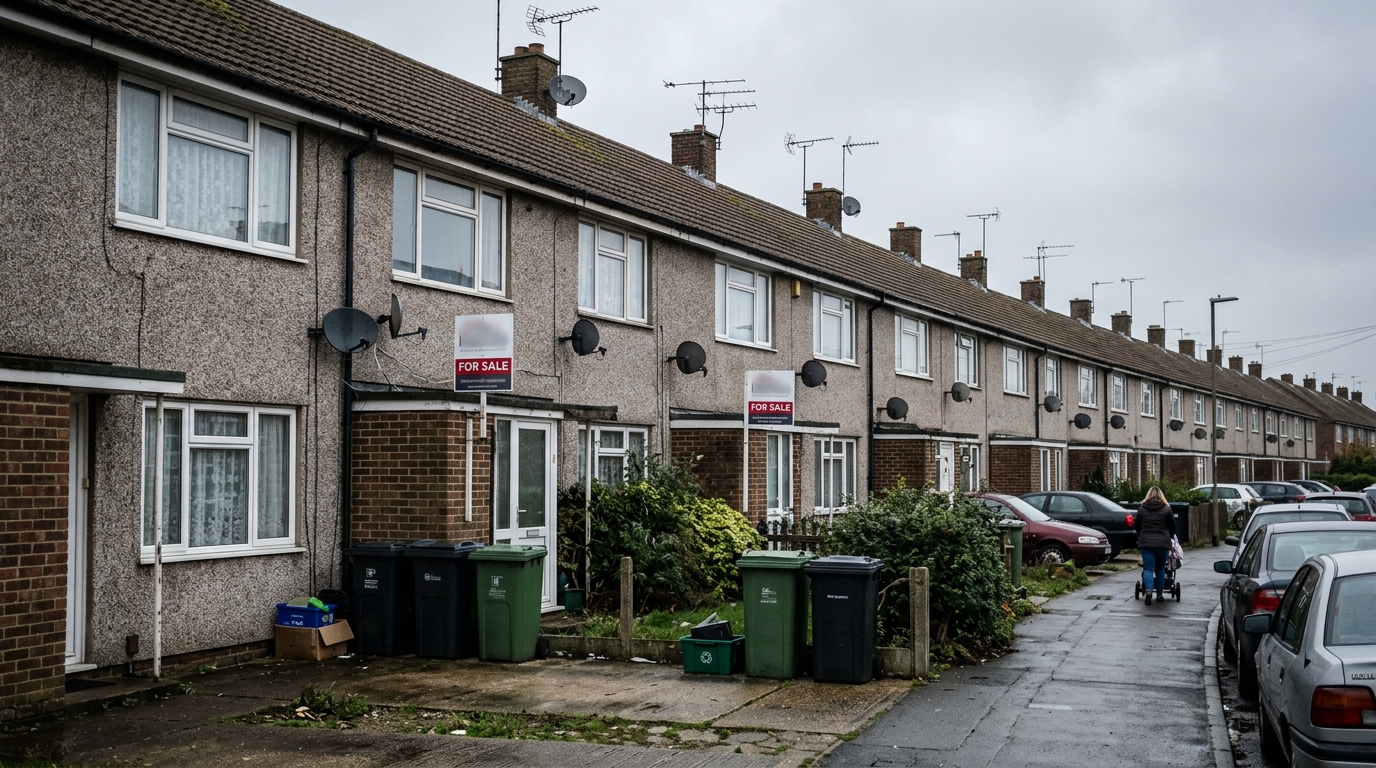

The government has confirmed it will bring forward amendments to the Social Housing Bill, a package of changes ministers say will strengthen homelessness prevention and slow the loss of the country's social housing stock. The announcement, made on Monday, sets out three specific measures: new referral powers for councils, a longer notice period before social homes can be sold outside the sector, and a fresh duty on public bodies to work together on prevention. For a county like Kent, where the pressure on temporary accommodation has become one of the sharpest local government stories of the year, this is not a distant Westminster debate. It touches directly on how councils, housing associations and private landlords interact across the county's rental market.
What the amendments actually change
Under the Bill, councils will be given new powers to refer homeless households to private registered providers of social housing, strengthening collaboration between housing associations and councils, helping to reduce reliance on temporary accommodation and improve access to housing for those in greatest need. In plain terms, that means housing associations can expect councils to lean on them more heavily as a route out of costly nightly-paid accommodation.
The second measure is arguably more consequential for anyone with an interest in buying or holding property that was once part of the social stock. The Bill will also introduce a new disposals notification requirement, which will give councils and other social housing providers better opportunity to purchase social homes before they are sold outside the sector, which will help to retain much-needed housing stock. Analysis of the detail shows the government intends to double the minimum notice period from four weeks to eight. The Bill currently proposes a four-week minimum notice period, and the government now intends to double it. That is not a small technical tweak. That extra month could matter when a council needs a valuation, funding approval and a cabinet decision before it can buy a home. It does, however, stop short of giving local authorities first refusal. It does not give the council a veto or a right of first refusal, and a housing association could still choose another buyer once the minimum period has passed. For investors who track ex-social stock as it comes onto the open market, the window before such properties reach a portal listing is about to lengthen.
The third strand, a new Duty to Collaborate, will require public services to work more closely together to identify people at risk of homelessness and consider what action they can take within their existing responsibilities to help prevent homelessness, sits alongside the government's existing £39 billion, ten-year Social and Affordable Homes Programme. The government previously committed £39 billion over ten years through the Social and Affordable Homes Programme to support the delivery of new social and affordable housing.
Kent's own divide lays bare the stakes
National policy rarely lands evenly, and Kent's district-level figures show exactly why these amendments matter here. The number of families in temporary accommodation has doubled in one part of Kent in just a year, while another district has managed to slash its total, with new government figures revealing a stark divide across the county. Folkestone and Hythe has seen the steepest rise anywhere in the county. Households in temporary accommodation there surged from 58 in 2024 to 118 just twelve months later, and more than half are families with children. The district's cabinet member for housing, Cllr Rebecca Shoob, has been direct about the cause. Soaring living costs and a shrinking private rental market have created a perfect storm, she says, adding that rents have gone up massively over the last few years, and alongside that, the local housing allowance in the district has lagged behind what actual rents are.
Thanet tells the opposite story. The district has recorded the biggest drop in the county, cutting its total by almost a third, from 302 households to 219. Much of that improvement has come from the council buying its own stock rather than relying on the private sector for nightly-paid placements. Thanet has acquired 170 units of temporary accommodation, allowing the authority to cut costs, improve living conditions and drastically reduce the number of families sent out of the district for housing. Dartford has taken a similar route, though at real financial cost. After a bid for government support to purchase 20 homes for the homeless and refugees was turned down, the council ended up spending £1.7 million to acquire just four homes instead, with nearly £1 million of that coming from its own reserves. Across the wider county, excluding Medway, Kent County Council's own bulletin reports that an average of 2,091 households were in temporary accommodation at any one time over 2022/23 to 2023/24, a baseline that gives a sense of scale to the district-by-district swings now being reported.
What it means for landlords and investors
None of these three amendments directly regulates private tenancies. But they reshape the market landlords operate in nonetheless. The push to refer homeless households to housing associations rather than into nightly-paid private accommodation is, in effect, an attempt to reduce councils' dependence on the private rented sector for crisis housing, a sector that has been absorbing a growing share of temporary placements as council and housing association stock has tightened. Landlords who currently let to councils on nightly or short-term contracts may see referral patterns shift towards housing association stock instead, particularly in districts under the greatest pressure.
The disposals notification change matters more directly for investors eyeing ex-social housing. An eight-week minimum notice period gives councils longer to raise capital and secure approval before a housing association can sell to the open market, which could mean fewer such properties reaching portals like the major national ones at the pace investors have grown used to, and a longer, more bureaucratic path to acquisition when they do.
Meanwhile, the underlying pressure on Kent's rental market continues regardless of what happens in Westminster. In Medway, there are currently 1,250 homes listed as available for rent, with an average asking rent of £1,312 per month, above the 12-month achieved average of £1,211, suggesting the market is continuing to move upward. That tightness, replicated with local variations across much of the county, is precisely the backdrop against which councils are scrambling to secure temporary accommodation and against which any reduction in available private rented stock, however marginal, is felt keenly by tenants and felt as opportunity or risk by landlords.
A bill still some way from law
None of this happens overnight. The Social Housing Bill has yet to complete its passage through Parliament, and the timetable is not tight. With committee stage not scheduled to begin until 27 October, Royal Assent is not imminent. The amendments confirmed this week are proposals rather than powers councils can use today, and the detailed wording has yet to appear before MPs. For landlords weighing whether to hold, sell into the social sector or expand a portfolio around ex-council stock, that gap between announcement and enactment is worth factoring into any timeline.
What Kent's own data makes clear is that the pressures this Bill is trying to address are not abstract. Folkestone and Hythe's doubling of temporary accommodation cases, Thanet's hard-won reduction through direct acquisition, and Dartford's costly scramble for four homes all point to a system under strain long before this legislation reaches the statute book. Landlords, tenants and investors across the county would do well to treat the coming months of parliamentary scrutiny not as background noise, but as a live negotiation over how much of Kent's housing stock stays public, how much reaches the open market, and on what terms.