
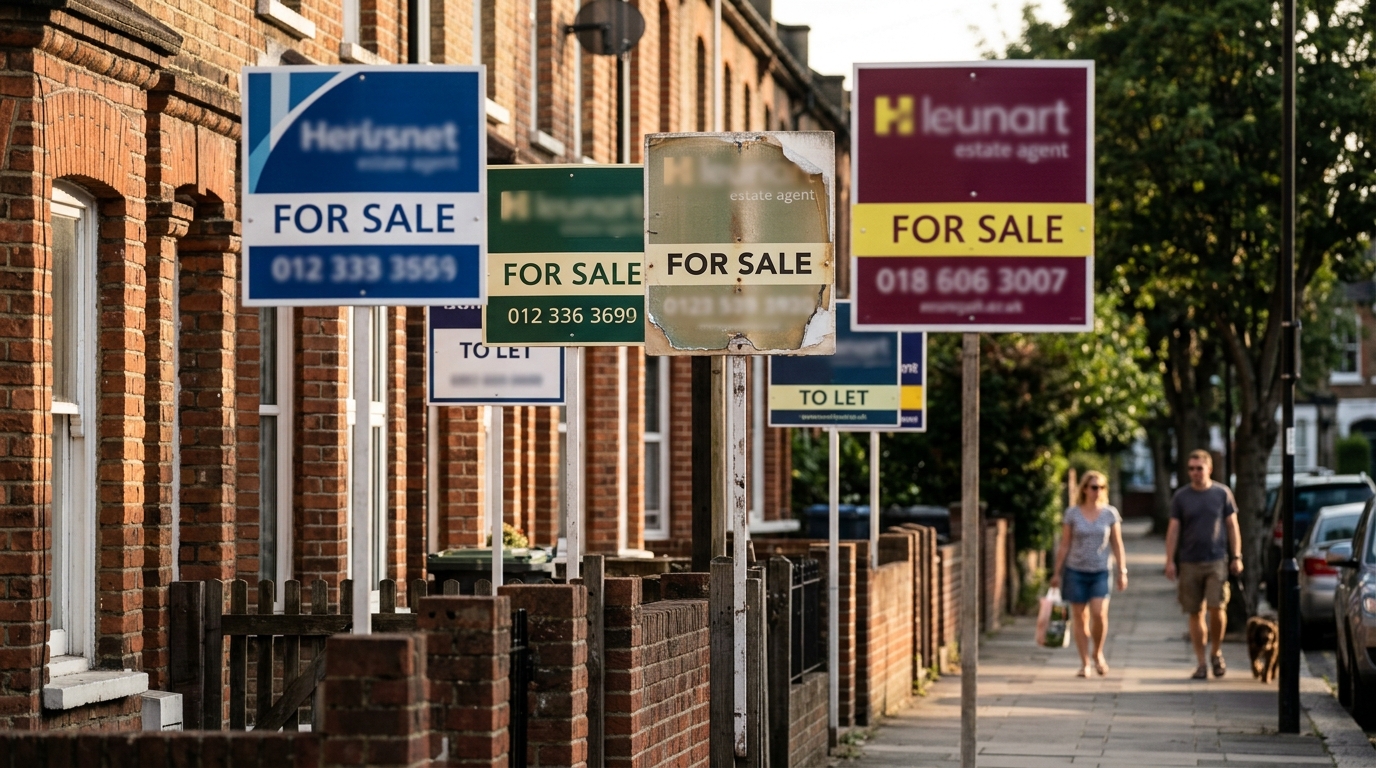

The UK property market shook off its midsummer stumble last week with a confidence that will reassure agents and sellers alike. After last week's unexpected drop in sales agreed, the market bounced back, with 24.4k homes going sold subject to contract in Week 32, up from the drop to 21.7k the week before and much closer to where we would expect the market to be at this point in August. The question worth asking, of course, is whether that rebound tells us something meaningful or whether it simply confirms what most experienced agents already suspected.
The evidence increasingly suggests last week's fall may simply have been a hangover from the hot weather, or higher numbers of people on holiday and the summer slowdown, rather than anything more sinister. That reads as reassuring. It should be taken as such, but only up to a point.
A Market That Rewards the Right Price, and Punishes the Wrong One
Beneath that headline, the market remains brutally price sensitive. Half the homes leaving estate agents' books are still withdrawing unsold, while four out of five homes listed and sold so far in 2026 achieved that sale without needing a price reduction. Read those two facts together and a clear picture emerges. Sellers who price correctly at the outset are finding buyers. Those who don't are watching their properties sit, and ultimately walking away with nothing agreed.
The July completions data sharpens that picture considerably. In July 2026, only 51% of homes that left agents' books exchanged and completed, with the rest, 49%, withdrawing unsold. The seven-year average exchange-to-listings ratio is 57.6%, which itself includes the inflated post-lockdown years. Nearly half of all homes that formally left the market did so without a buyer. That is not a wobble. That is a structural feature of a market where buyers are choosy, supply is plentiful, and overpriced homes simply stall.
Levels of supply remain high and sales are slow, with one property portal reporting in June that three fifths of homes placed on the market since the start of the year were yet to sell. For sellers, that statistic should concentrate the mind before a valuation meeting, not after one.
New Listings Are Holding Up, but the Pace of Sales Has Slipped Behind Last Year
The listings pipeline remains active. In Week 32, week ending 16th August 2026, 32.6k new properties came to market. The weekly 2026 average sits at 36.4k. That is a steady supply of fresh stock, and it's running slightly below the weekly average, which is exactly what you'd expect during the height of summer school holidays.
Year to date, the picture is nuanced. The 2026 weekly average for sales agreed stands at 24.6k, and the decade average for this point in the year is 25.2k. The market is, in other words, operating close to long-run norms on a weekly basis, even if the cumulative annual total tells a different story. The UK property market has spent much of 2026 looking weaker than last year, but the latest figures suggest the gap may finally be narrowing.
That gap relative to 2025 needs context. 2025 was itself an exceptional year, turbocharged by buyers rushing to beat the stamp duty deadline changes. Comparing 2026 to that benchmark will always look unflattering. Against 2023, the picture reverses entirely: every region is comfortably ahead.
Asking Prices Are Coming In, Mortgage Costs Are Nudging Up
The cost of borrowing has been quietly working against sellers, particularly at the upper end of the market. The average two-year fixed rate deal reached 5.60% as of 19 August, compared with 4.83% on 27 February. That shift of more than three quarters of a percentage point over six months matters enormously to a buyer stretching their budget on a family home.
According to one of the major property portals, average asking prices for newly listed homes fell 2.0% in the four weeks to August 8, a sharper drop than the 10-year average August fall of 1.3% and the steepest such decline since 2018. On its own, seasonal price softness in August is normal and expected. A drop steeper than the 10-year average, happening alongside rising borrowing costs, is something agents and sellers across the country ought to factor into their pricing conversations right now.
On an annual basis, asking prices were down 1.0%, the biggest yearly fall since December 2023, with London leading the decline at 3.1% even as prices in the north of England continued to rise. The regional divergence is real and growing. UK house price growth has slowed to 1.3% in June, down from 1.7% a year ago. In cash terms, a typical home in the North West has gained £7,100, while a typical London home has lost £3,270 and the South East is down £1,480. Tonbridge and the wider Kent commuter belt sits squarely in that softer South East picture.
What This Means for Tonbridge Sellers Specifically
Tonbridge is, by any measure, a premium market within Kent. Land Registry data confirms that context. House prices in Tonbridge have an overall average of £491,524 over the last year, with semi-detached properties selling for an average of £503,765, and detached properties commanding £783,598. Those are substantial sums, and they make the question of pricing accuracy correspondingly more consequential. A 5% overpricing on a £500,000 home is a £25,000 error that buyers with access to the same data will spot immediately.
The national withdrawal rate, sitting close to 49%, is a number that should be read carefully by anyone thinking of listing in Tonbridge this autumn. Our own data across 12 local areas shows a sold subject to contract rate of just 20%, against a backdrop of average days on market that run considerably longer than the national norm. The South East, and West Kent in particular, has not been insulated from the dynamics playing out at a national level. Bath, Oxford and Harrow postal areas show the opposite trend to the northern hotspots, with sales agreed falling consistently and price growth slipping from positive twelve months ago to flat or negative now. The commuter belt towns that surround London are facing the same structural headwind.
The fall-through rate, at least, offers a sliver of comfort. 5.07% of homes sold subject to contract fell through in June 2026, below both the 2025 average of 5.3% and the ten-year average of 5.8%. When sales do reach agreement, they are, by historical standards, reasonably likely to complete. The problem is getting to that agreement in the first place.
The Gap Between What Sellers Want and What Buyers Will Pay
One of the most revealing metrics in the current data concerns the gap between listing prices and the prices at which homes are actually agreed. The difference currently stands at 9.9%, against a long-term ten-year average of 16% to 17%, with average listing asking prices at £392k versus sale-agreed asking prices of £357k. A narrower gap might sound encouraging, but it reflects a market where sellers who arrive overconfident are simply not getting to the sale-agreed stage at all. The homes that do go under offer are those where the initial list price was already calibrated realistically.
For homeowners, this means there are still buyers in the market, but they have more choice and are less forgiving when a home is launched at an unrealistic asking price. Properties that are well presented, marketed properly and sensibly priced are still attracting interest. Those that chase the market from behind may struggle.
That is not a new observation. But it has rarely been more precisely evidenced than it is right now.
Looking Ahead: Autumn Will Sort the Serious From the Hopeful
The autumn market in Tonbridge will begin to take shape over the next four to six weeks as the school holidays end and buyers who paused their search over summer re-engage. A summer slowdown and a near 12-year high in the number of homes for sale has weighed on the market, though buyer demand did pick up 5% following the arrival of the new Prime Minister in office on July 20, even as it remained 10% below year-ago levels. That modest uptick in demand is genuine, but it's arriving into a well-stocked market where buyers hold negotiating power they haven't had for years.
Economic forecasts are less pessimistic, with expectations that the Bank of England will hold rates steady until rate cuts can resume in 2027. Mortgage rates are therefore unlikely to fall meaningfully before the new year. Any autumn uplift in activity will be driven by need-to-move buyers rather than rate-incentivised ones.
The Week 32 bounce is genuinely good news. It confirms that the market's underlying pulse is still beating, that buyers haven't disappeared, and that the summer lull was seasonal rather than structural. But the recovery everyone in this town should actually be waiting for is not a recovery in transactions; it's a recovery in price discipline. When sellers arrive at a valuation with realistic expectations, and agents support them with honest numbers rather than flattering ones, the data shows that homes sell. Right now in Tonbridge, that distinction is everything.