
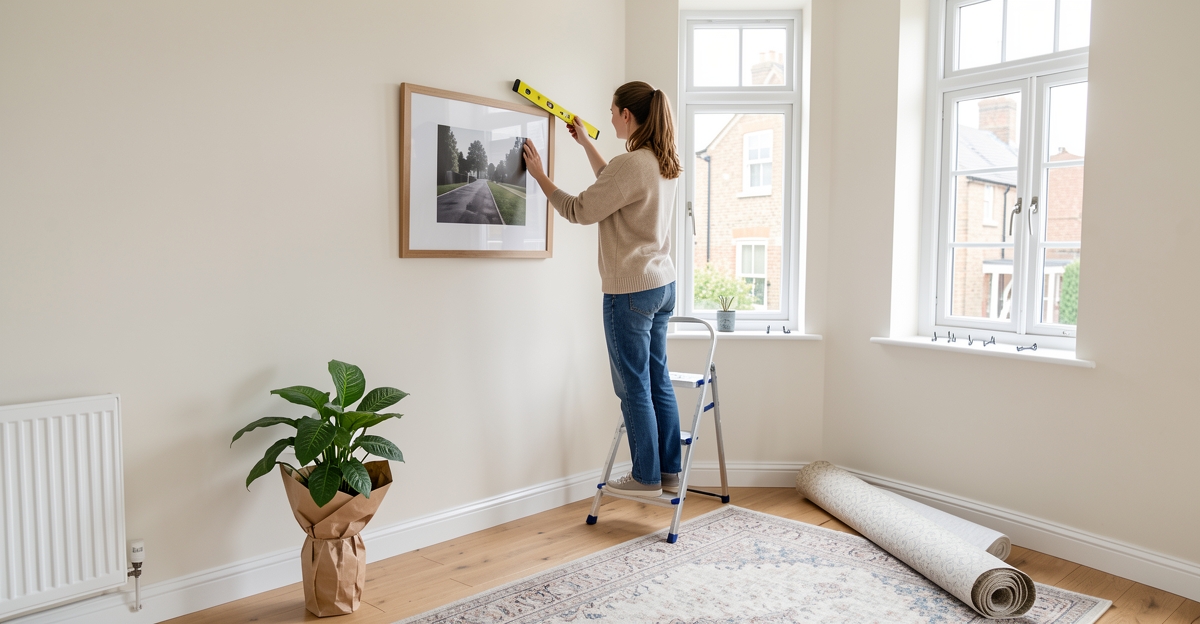

The question of how to make a rented property feel like home has rarely felt more pressing. A piece published by the BBC this week, drawing on advice from B&Q chief executive Graham Bell and interior designers Lara Clarke and Lydia Lloyd, laid out five practical steps for tenants hoping to personalise their homes without falling foul of their tenancy agreements or losing a penny of their deposit. The timing is not accidental. Across Britain, and acutely in commuter towns like Tonbridge, more people than ever before are renting for longer stretches, and the psychology of what it means to occupy someone else's property is quietly shifting.
A New Kind of Renter
The backdrop to all of this is financial. The ease of buying a home has a direct impact on the rental market, and higher mortgage rates have had the greatest impact on first-time buyers, where deposits and required income levels are highest. For many people in towns like Tonbridge, where the typical sale price sits well above the national average, that barrier is not simply inconvenient, it is definitional. Ownership feels categorically out of reach, and so the rental home becomes the actual home, not a temporary waypoint.
Recent figures show that renters in the UK are now spending around 36.1% of their average earnings on rent, the highest level recorded, a figure that reflects a long-standing imbalance between tenant demand and the number of available rental properties. That proportion has consequences far beyond the household budget. When a third of your income disappears into rent each month, the psychological stakes of where you live rise sharply. People want the place to feel like theirs, not because they are being sentimental, but because it is where they are spending the majority of their waking lives.
Legislation That Changed Everything
From 1 May 2026, new laws came into force that change how renting works across England. The Renters' Rights Act introduced new rights and responsibilities for landlords, letting agents and tenants, with key changes including the end of Section 21 'no fault' evictions, limits on rent increases, and the move from fixed-term to rolling tenancies. That last point matters enormously when it comes to the question of personalisation. A renter on a rolling tenancy, who cannot be evicted without a specific legal reason, has fundamentally different incentives to invest in a space than one who suspects they could be asked to leave at two months' notice with no explanation given.
For the average renter, this isn't just a legal change; it's a psychological one. The willingness to hang art, rearrange furniture, or spend a weekend improving the lighting in a flat is not simply about aesthetics. It is an act of optimism, a signal that you believe you'll be there long enough to enjoy the result. The Renters' Rights Act has, for the first time, given millions of people the legal grounds for that optimism.
Renters are responding positively to the reforms, with a significant increase in support since the legislation first passed. Six in ten say they are aware of the Act and what it aims to achieve, up from 19 per cent in October, and 62 per cent of renters believe it will improve their housing conditions and protections. That heightened awareness is itself meaningful. It is one thing for legislation to be passed; it is another for the people it is designed to protect to actually know what it does.
The Practical Art of Making It Yours
So what does the BBC's expert guidance actually recommend? The starting point, unsurprisingly, is legal. Read the tenancy agreement. Graham Bell of B&Q noted that many landlords may be open to sensible improvements, particularly where something is being upgraded rather than fundamentally altered. Getting permission first, he said, avoids an expensive argument on the way out. It is the kind of advice that sounds obvious but rarely gets followed in practice.
Beyond that, the experts pointed to changes that travel with you when you move. Stick-on tiles for kitchens, suction storage in bathrooms, and expandable blinds that need no drilling are all cited as renter-friendly upgrades. Interior designer Lara Clarke argued that artwork is probably the easiest single change a tenant can make, because it "instantly makes a space feel more occupied and finished." Her suggestion of using command strips rather than nails keeps deposits intact and damage to a minimum.
Lighting received the most sustained attention from the panel, and with good reason. Bell observed that rental properties often come with bright, flat overhead lighting that drains any atmosphere from a room, and that swapping to warmer bulbs or adding strip lighting with a softer tone can transform a space without requiring a single structural change. Clarke recommended layering light sources, combining floor and table lamps with the existing ceiling fitting, and noted the abundance of battery-powered options that remove the need to be near a socket at all. She added that pairing warmer lighting with floor-to-ceiling curtains and scatter cushions amplifies the effect further. Small changes, coherently applied, produce results that are genuinely disproportionate to their cost.
What This Means in Tonbridge
Tonbridge has quietly become one of Kent's most compelling rental markets, with strong commuter demand, a growing professional tenant base, and a rental supply that continues to lag behind enquiries. Direct rail services to London Bridge in under 40 minutes continue to pull in commuters priced out of closer-in locations. These are not transient residents passing through on their way to a mortgage approval. These are professionals, families and young couples who have made a considered choice to put down roots here, even if those roots are in rented ground.
Tonbridge offers something that is genuinely harder to find than it ought to be: a liveable, grounded town that does not ask you to stretch your budget to its absolute limit just to be there. That relative affordability, measured against South East comparators, means the renters who arrive here typically have a little more financial headroom than their counterparts in Sevenoaks or Tunbridge Wells. That headroom matters when the conversation turns to a weekend spent improving a kitchen with stick-on tiles or investing in a floor lamp that transforms the corner of a living room.
There is a supply dimension here too, and it cuts in two directions. The single biggest driver of rental inflation remains the imbalance between supply and demand. There are roughly 25% fewer homes available to rent than before the pandemic, and new investment in the private rented sector remains low. For landlords operating in Tonbridge, the practical consequence is that well-maintained, well-presented properties attract strong tenant interest and, critically, tenants who want to stay. As tenants gain greater flexibility to leave with two months' notice, resident experience becomes a bigger part of building trust, improving retention and keeping good tenants for longer. A landlord who actively encourages a tenant to personalise a property within sensible limits is, paradoxically, doing themselves a favour.
The Tension at the Heart of the Market
Not every landlord sees the new legislative environment as an opportunity. In October, a quarter of renters were concerned that limitations on evictions and bidding wars could cause rents to increase, a figure that has since risen to 45 per cent. The same proportion worry the reforms could lead to landlords leaving the market and reducing supply. Those fears are not without foundation. Landlords looking for a new mortgage deal will be hoping for further falls in mortgage rates to help offset the 5% stamp duty surcharge, less generous mortgage interest tax relief, and higher income tax charges on property introduced in the 2025 Autumn Budget. The cost of being a landlord has risen materially, and some will decide the arithmetic no longer works.
The average two-year fixed-rate mortgage deal sat at 5.61% as of 18 August, according to financial data firm Moneyfacts, a rate that makes buy-to-let viability a genuine calculation rather than an assumption. If supply contracts further in towns like Tonbridge, the tenants who have finally found the legal confidence to personalise their homes may find that competition for those homes intensifies all the same.
A Longer View
The BBC piece is, on the surface, a practical guide to home improvement for renters. But read in context, it is something more. It reflects a structural change in British housing: renting is no longer a temporary condition for millions of people, it is a permanent state. The practical tips, the command strips and the layered lighting and the vintage prints from antique markets, are symptoms of that shift. People are no longer decorating a flat while they wait for a mortgage offer. They are making a home.
For Tonbridge, which has absorbed a growing cohort of long-term renters precisely because of its combination of connectivity, community and relative value, that shift carries weight. Forecasts point to continued moderate growth, with most analysts expecting full-year 2026 rental growth in the 2 to 3.5% range. The pace of rental inflation may be easing, but the depth of tenant commitment to the towns they have chosen is, if anything, deepening. That is a different kind of stability, and for a market that has spent years defined by flux, it may turn out to be a more durable one.