
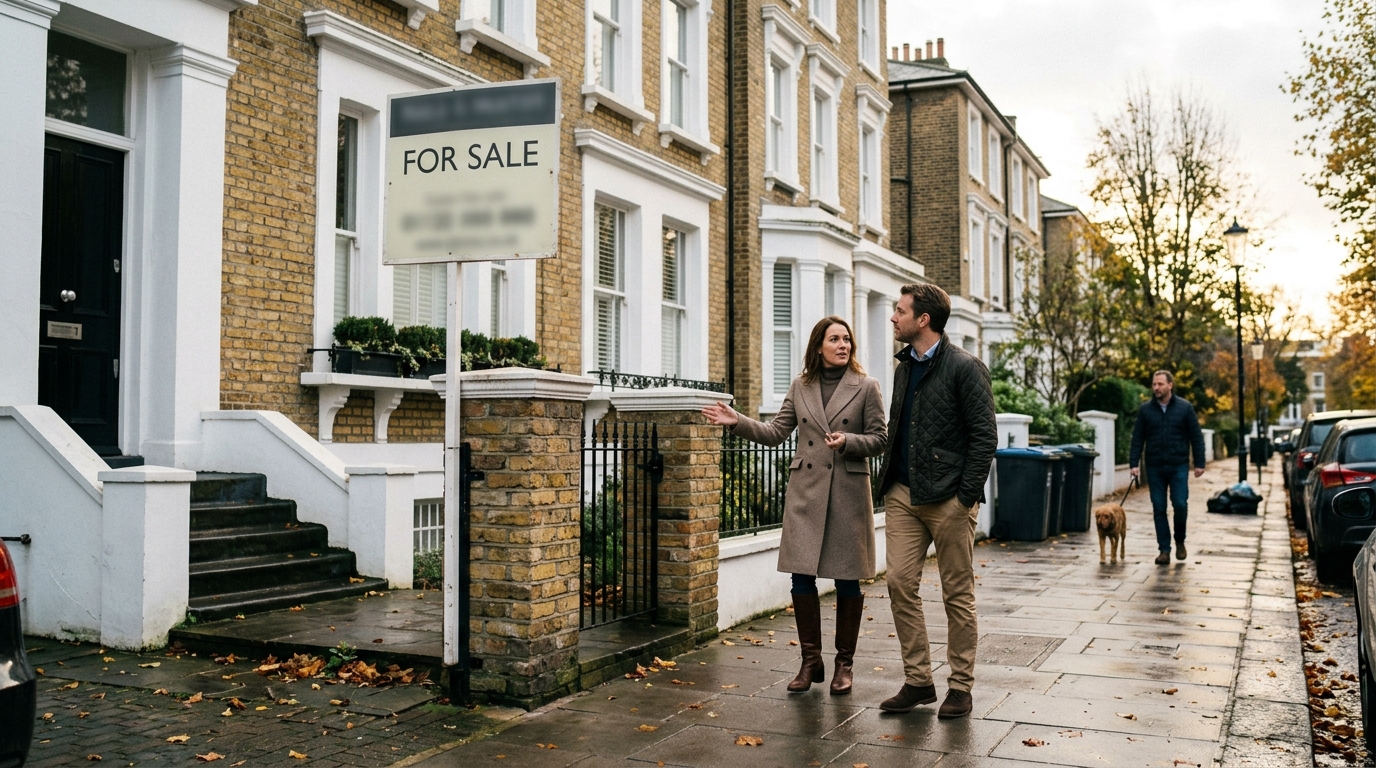

Multimillion-pound markdowns across Kensington, Chelsea, and Belgravia are testing the traditional assumptions of prime central London property. In South Kensington, a lateral apartment overlooking Queen's Gate Gardens has seen its asking price trimmed by nearly £1m to £4.4m. Streets away, an imposing town residence originally marketed at £20m has shed £6m, while in Notting Hill, a classic stucco-fronted family home listed two years ago at £16m sits below £14m. The capital's most exclusive postcodes are confronting a distinct structural pause.
A Distinct Cooling at the Capital's Peak
The scale of the adjustment reflects changing priorities among Britain's wealthiest homeowners and international investors. Prime central London has long operated in an economic stratosphere detached from broader domestic realities, yet recent performance figures tell an unvarnished tale. While national values crept forward by roughly 2% across the year to June, inner London boroughs saw values contract by 8.3%, according to the Office for National Statistics. In Westminster, which encompasses Belgravia, Mayfair, and Marylebone, the drop reached a steep 25%.
Historic precedent offers little comfort to prime London vendors trying to hold onto peak valuations. Buying agent Harry Dawes, operating out of Belgravia, points to concrete transactional histories rather than speculative sentiment. In Pont Street, five minutes from Harrods, a flat that achieved £4.4m in 2014 subsequently traded for £3.5m, and can now be purchased for £2.5m. The era when prime central London addresses were considered infallible stores of speculative capital has, for now, hit firm mathematical limits.
The commuter corridor stands its ground
The recalibration in central London tells a very different story from what is unfolding just beyond the M25. The national housing market settled around an average price of just under £275,000 in September according to Nationwide, yet the affluent commuter belts of West Kent occupy their own substantial middle ground. Across our regional network, the average transaction level rests at £875,665, showing steady annual price retention at precisely 0.0% growth. Prime country houses and town residences here are not suffering the severe double-digit corrections seen along the Thames.
Wealth preservation takes a different form once you cross into the garden of England. Rather than absorbing deep cuts to offload secondary residences or oversized metropolitan pied-a-terres, homeowners across Kent are holding pricing discipline. Sellers here have demonstrated minimal appetite for panic discounting. Transactions take measured time, with properties averaging 192 days on the open market, but underlying interest remains anchored by genuine lifestyle and schooling requirements rather than foreign financial flows.
Shifting Capital, Shifting Priorities
The divergence highlights a wider trend in domestic relocation. For generations, equity accrued rapidly in prime inner London postcodes before trickling outward toward the Home Counties. What we see today is a more deliberate, structural reallocation. High borrowing costs and broader domestic fiscal debates have caused central London flat markets to stall entirely, prompting families to question the utility of urban square footage when comparable capital yields significant acreage, established gardens, and direct rail connections back to the City.
A £4m budget in central London, once the baseline for an uncompromised family apartment in SW7, now faces steady erosion alongside substantial carrying costs. That same equity transplanted into prime Kent secures substantial period estates, unencumbered by the volatility currently dogging super-prime London terraces. While the capital's top tier searches for a new price floor, regional commuter markets continue to benefit from buyers trading prestige postcodes for space, stability, and enduring architectural charm.