

Anyone hoping the Bank of England would quietly wave through another rate hold this week has had a rude awakening. Inflation has just done the opposite of what the Bank wanted, and the reasons for that are sitting a long way from Kent, in the oilfields and shipping lanes of the Middle East.
Official figures released on Wednesday showed the Consumer Prices Index climbed to 3.1% in the year to August, up from 2.9% in July, its highest reading in six months. The acceleration was driven by rises in the cost of petrol, diesel and airfares. Economists had been braced for this. What they are less certain about is what the Bank's Monetary Policy Committee does next.
A decision balanced on a knife edge
Most economists still expect the nine member MPC to hold the benchmark Bank Rate at 3.75% when it announces its decision at midday on Thursday, which would mark a sixth consecutive hold. But the vote is unlikely to be unanimous. Three members of the nine-person MPC, Huw Pill, Megan Greene and Catherine Mann, voted to hike rates to 4% at the last meeting, and economists expect the same outcome at the next one. That is not a committee that agrees the job is done.
There is a reasonable argument for staying calm about the headline number. Services inflation, which reflects prices in the UK's dominant industry, stayed at 3.4% in August, indicating a lack of so called second round effects such as wage demands and broader shop price increases. In plain terms, the price shock hasn't yet fed through into the sort of wage spiral that would force the Bank's hand more aggressively. But the outlook isn't reassuring either. Inflation is expected to be pushed up when Ofgem's next energy price cap kicks in from October, which will see household energy bills rise by 4% for a typical dual fuel household. That's before anyone accounts for where oil prices go next.
Why an Iranian oil field matters to a Kent buyer
Oil moved above $100 a barrel on 9 September and has stayed there, with little sign of a lasting truce in the conflict. Bank governor Andrew Bailey had already flagged the consequence of that scenario back in July, warning that if the conflict dragged on with oil above that level, rates would likely need to rise further still. Some economists have gone further. Academic analysis published earlier this year suggested UK inflation could reach around 4% this year, up from a previous estimate of 2.5%, largely because of the knock on effects of the conflict on energy and fertiliser costs, which in turn push up food prices.
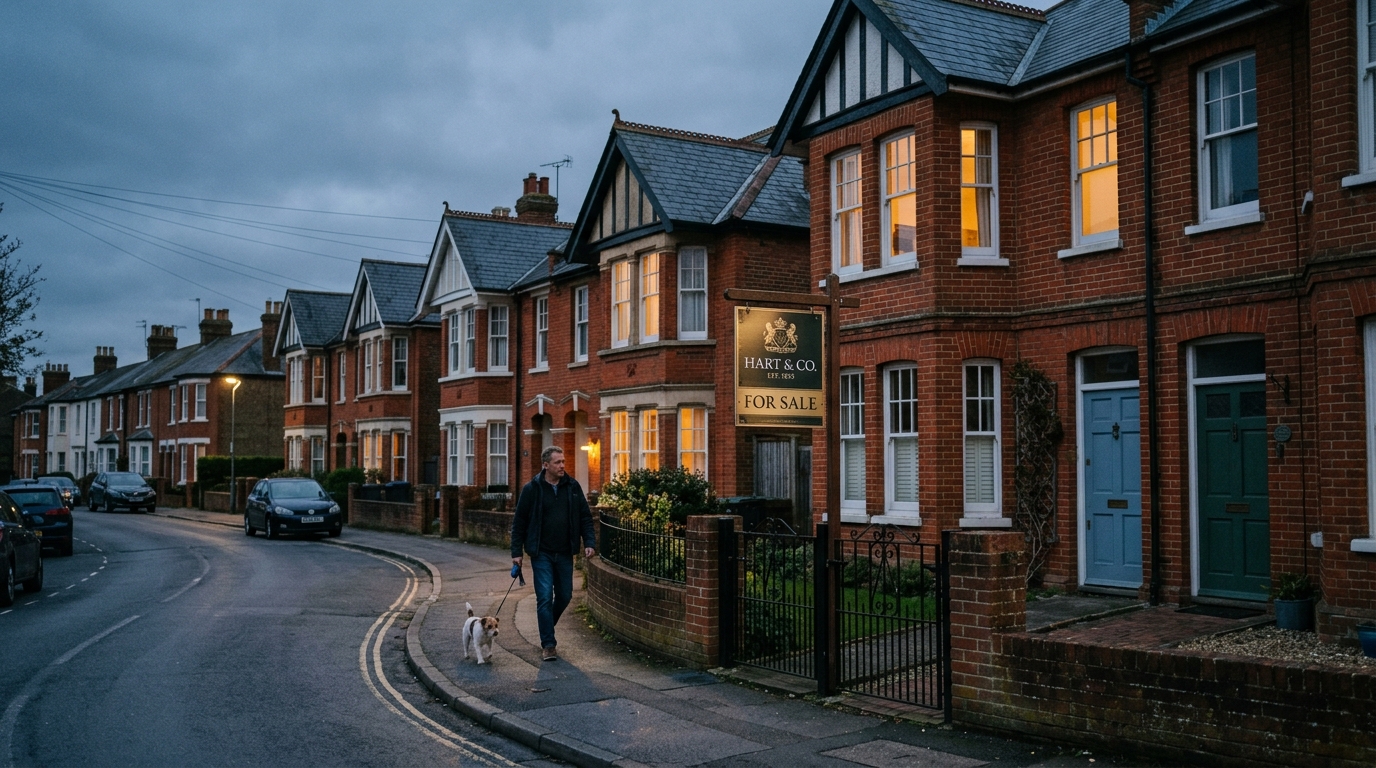
For Kent, where the average property in our tracked areas now sits at £887,018, the maths of a rate rise bites harder than in cheaper regions. A quarter point move on a mortgage of that size translates into a meaningfully larger monthly cost swing than the same move applied to the national average home. Buyers stretching to afford homes in the county's commuter belt, and there are plenty of them given London's continuing pull on Kent's market, are precisely the households most sensitive to what happens in the swap markets this week.
Lenders have already started moving
Mortgage pricing rarely waits for the Bank's own announcement, and this cycle has been no exception. Given market expectations of a firmer Bank Rate, a host of major lenders have already increased the cost of new fixed rate mortgages in recent days, with the average two year fixed residential rate now at its highest since 11 May. Andrew Montlake, chief executive of mortgage broker Coreco, put it plainly, saying the latest inflation data showed that \"the inflation dragon has not been fully slain.\" His advice to borrowers was straightforward but worth repeating: those approaching the end of a fixed deal should start looking early, secure an option, and keep reviewing it, rather than assume rates will simply drift back down.
This isn't the first time the conflict has forced lenders' hands. Earlier in the year, as the war first escalated, major lenders including Nationwide and HSBC lifted pricing on a range of fixed rate products in response to a jump in swap rates. David Hollingworth, associate director at L&C Mortgages, said at the time that he did not expect mortgage costs to skyrocket but that borrowers considering a new fixed rate deal should try to secure that sooner rather than later. That advice looks just as relevant now as it did then.
What this means for Kent's slower moving market
Kent's own housing figures already tell a story of a market moving cautiously. Prices across the tracked areas are flat year on year, homes are taking an average of 188 days to find a buyer, and only around 31% of listed stock is under offer at any given time. Add a wobble in mortgage pricing to that picture and the temptation for some sellers will be to sit tight rather than test the market into an uncertain winter. Buyers, meanwhile, face a familiar tension: locking into a rate now feels prudent given lenders' recent repricing, but nobody wants to fix at a level that looks expensive within months if the Bank does eventually cut again.
The wider global picture doesn't offer much comfort on that front. The European Central Bank has already raised its own rate to 2.5%, citing the Middle East conflict and warning inflation was set to remain well above its target for some time. The US Federal Reserve moved its rate to a range of 3.5% to 3.75% for similar reasons this week. Central banks around the world are being pulled in the same direction by the same conflict, and the Bank of England is not immune to that pressure, even if it holds steady on Thursday.
A market waiting on events beyond its control
What makes this moment unusual for Kent's estate agents and their clients is how little of the pressure originates at home. Domestic wage growth isn't obviously out of control. Services inflation held steady last month. The story here is imported, arriving via oil tankers and gas pipelines thousands of miles away, and it will be resolved, if it is resolved this year, by events in the Middle East rather than anything the MPC does in London.
That leaves anyone with a Kent purchase in progress, or a fixed rate coming up for renewal, watching two things at once this autumn: Thursday's announcement from Threadneedle Street, and whatever happens next in a conflict that shows no sign of a lasting ceasefire. Neither is within a buyer's or seller's control, which is precisely why brokers keep repeating the same advice about acting early rather than waiting for certainty that may not arrive for months.